
If you are like me and chose not to pursue an MFA because you think no one can really teach you to write, and that writing is something you have to learn for yourself, then Roger Rosenblatt’s Unless It Moves the Human Heart: the Craft and Art of Writing is for you.
And if you have pursued an MFA because it made more sense than pursuing a PhD in English (as I did) or training in a trade (as  I was encouraged to), and you have benefited from the lessons, the workshops, and the camaraderie and are still writing – this book is also for you.
And for those who fall in neither of those categories, but who like to read a good book, especially a good book about how to live – because that’s what writing is: a way of life – then you would also be well-served to read this small gem of a book.
Recounting a class Rosenblatt taught in the Winter of 2008 at Stony Brook University on Long Island, Unless It Moves the Human Heart is filled with lively dialogue and witty narrative as it tells two stories: the story of how his students processed the lessons he offered, and the story of his pedagogy. The book is both expository narrative and memoir; it is also profound and funny. As Rosenblatt explains in his preface, the book is a fraud: “Nobody really said what I say he said in class. But the ideas expressed here were expressed there . . . And the students themselves were just as gifted, lovable, and annoying as I have drawn them.”
This short book – it’s just over 150 pages long – follows the course of “Writing Everything,” Rosenblatt’s class in which students study short stories, essays, and poems. Rosenblatt introduces each of his students, and in each chapter he reports their reactions to the lessons at hand. He includes some of the students’ actual writing, and he refers to a wide variety of other authors’ work to emphasize the points he makes. If nothing else, a writer could cull an impressive reading list from the works Rosenblatt cites.
Even though I did not pursue an MFA, I did once long for the discipline of deadlines, the support of peers, and the access to writers, agents and editors that MFA programs offer. Now, I’m too busy living the writing life I’ve created on my own to care what I’ve missed. But when I do long for a dose of professional help or writerly companionship, I often read a writing manual or a writer’s memoir. Rosenblatt’s Unless It Moves The Human Heart is one of the best. It is less about the technical craft of writing and more about why writing matters. Rosenblatt says, “The trouble with much writing today is that is has been fertilized and nurtured in classrooms like ours, where the elements of effective writing have been isolated and studied in parts.”
Rosenblatt takes a holistic approach. “Writing,” he says, “is the cure for the disease of living. Doing it may sometimes feel like an escape from the world, but at its best moments it is an act of rescue.” He ends the book with an exhortation to his students –one that applies to all writers: “Your life matters. Now make it matter to others.”
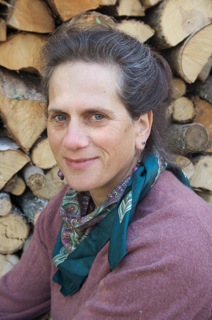
Deborah Lee Luskin is the author of Into The Wilderness, “a fiercely intelligent love story” between two 64-year-olds, set in Vermont in 1964. Luskin is a regular Commentator on Vermont Public Radio, an editorial columnist, and a free-lance writer. In addition, Luskin teachers literature and writing in prisons, hospitals and libraries; she holds a PhD in English Literature from Columbia University. Learn more at her website: www.deborahleeluskin.com
Sounds like a great book. As a former English major, I definitely enjoyed the camaraderie of creative writing workshops. Always good to get feedback on your work, and to read what others are writing. Most importantly, it was good just to know that you weren’t alone!
Thanks, I will certainly read it!
Sounds like an excellent read. I looked into earning an MFA, but decided to pursue a library media specialist certificate instead – something a little more steady, better bang for the buck. I do, however, write when every and where ever I can, in hopes that someday, somehow, someway, I can pursue what I think is my calling…
Great recommendation! I’ll definitely check this out because I love reading about writing when I’m feeling un-inspired.
I went the MFA route (recently). The deadlines and camaraderie were indeed fabulous! Now that I am teaching, there is less of my own writing — at least during this first year — but I use my blog posts as an opportunity to practice my craft and connect with others. Thanks for the book recommendation – it sounds wonderful.
This looks great. I’ve thought about a MFA precisely for the deadlines and camaraderie, but given the structure of my life these days, I’ll do better just writing and attending workshops when I can. Thanks for the tip.